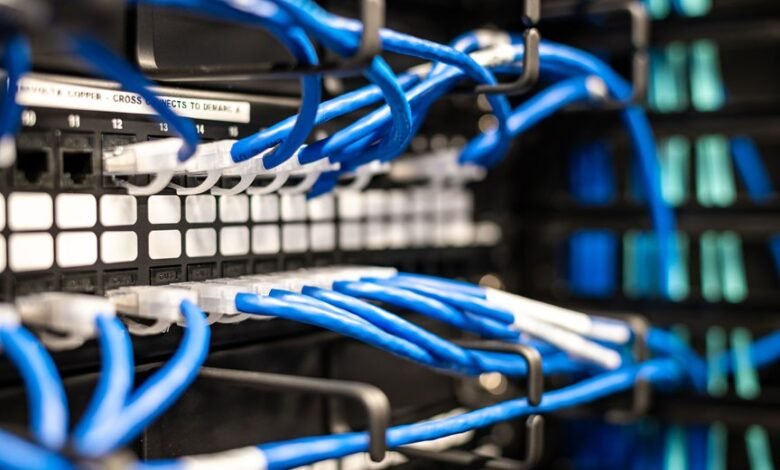
Private IP addressing governs how assets are isolated and accessed within a network. The guide emphasizes deterministic ranges, reserved subnets, and repeatable procedures to prevent drift. It compares static and DHCP assignments, highlighting conflict avoidance and auditing. DNS and firewall strategies are tied to predictable connectivity and security posture. The discussion ends with a clear path toward disciplined implementation, inviting consideration of governance, tooling, and future-proofing as constraints evolve.
What Is Private IP Networking and Why It Matters
Private IP networking refers to a set of IP addresses reserved for use within private networks, isolated from public Internet routing. It enables controlled growth, predictable addressing, and local traffic efficiency. This approach emphasizes two word ideas: Private addressing, Network isolation. By design, it reduces exposure, supports scalable architecture, and safeguards sensitive assets. The result is modular, flexible topology adaptable to diverse organizational needs and freedom of experimentation.
Plan Your Private IP Ranges and Subnets for a Simple Network
A clear planning phase follows from the overview of private IP networking, establishing a deterministic addressing scheme for a small network. Planning subnets and address allocation should outline reserved ranges, subnet masks, and growth capacity. This phase emphasizes conflict avoidance through nondestructive allocation, documented policies, and repeatable procedures, enabling robust address planning for scalable, simple network implementations without ambiguity or overlap.
Static vs DHCP: Assigning Addresses Without Conflicts
Static addressing and DHCP each offer distinct mechanisms for assigning IPs, and understanding their trade-offs is essential to prevent conflicts. In practice, address allocation requires disciplined tracking and documentation, while conflict detection mechanisms monitor for duplicates. DHCP automates reuse while reserving critical devices; static methods reduce drift but demand meticulous bookkeeping. A disciplined approach balances control with flexibility, minimizing misconfigurations and overlap.
DNS, Firewall Rules, and Best Practices for a Safe, Reliable LAN
DNS, firewall rules, and best practices form the backbone of a secure, reliable LAN by governing name resolution, traffic control, and posture management. The guidance emphasizes Firewall basics to restrict exposure, and DNS strategies to ensure resilient lookups, redundancy, and cache hygiene. Implement disciplined rule sets, regular audits, and explicit forwarding policies to maintain minimal attack surface and predictable, auditable connectivity.
Frequently Asked Questions
How to Recover From IP Conflicts After a Reboot?
A reboot may clear transient conflicts; monitor ARP tables and DHCP leases, then reassign static or reserved IPs. How to prevent future issues involves precise IP planning and documented conflict resolution procedures to minimize downtime.
Can Private IPS Be Routed Over VPNS Between Sites?
Can private IPs be routed over VPNs between sites? Yes, Private IPs can traverse VPN routing, enabling site-to-site connectivity; however, precise subnet planning, route propagation, and encryption policies are essential for secure, deterministic VPN performance.
What Are Best Practices for IP Address Documentation?
Documentation governance ensures consistent IP address records, while change control tracks modifications. The approach emphasizes centralized repositories, standardized naming, versioning, audit trails, and periodic validation, enabling disciplined, transparent updates for teams that value structured freedom.
How to Monitor IP Usage Over Time in a LAN?
Monitoring IP usage over time in a LAN involves continuous logging, subnet utilization analysis, and anomaly alerts while preserving NAT privacy; it supports documentation practices, detects IP conflicts, assesses private networks, monitors traffic, and informs VPN routing decisions.
Are There Privacy Risks With NAT in Private Networks?
Privacy risks exist: NAT limitations obscure end-to-end visibility, potentially hindering auditing and accountability in private networks. The system, while preserving freedom, trades direct addressability for centralized mapping, requiring careful policy, monitoring, and consent to mitigate exposure.
Conclusion
Private IP networking provides isolated, scalable connectivity for predictable LAN behavior. By planning ranges and subnets, you minimize drift and simplify management, while static and DHCP assignments reduce conflicts through disciplined allocation. A noteworthy statistic: organizations with formal IP address management reporting 40–60% fewer address conflicts and outages. The approach emphasizes DNS consistency, robust firewall rules, and documentation to ensure auditability and forward-compatibility, delivering reliable, repeatable network operations and clearer change control across the lifecycle of the private network.