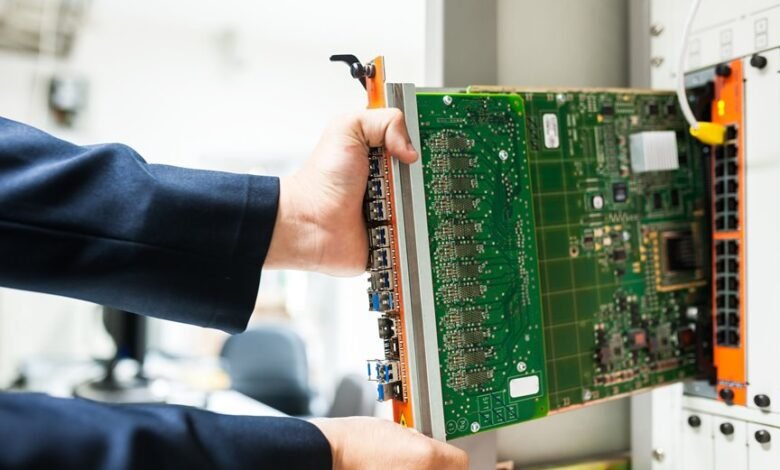
The 168.104 Router Network Configuration Guide outlines a disciplined approach to deployment and upkeep. It covers first boot setup, IP addressing, subnet planning, and routing basics with service configuration. Security hardening and ongoing maintenance are emphasized, including firmware updates and change documentation. The structure supports predictable routing, VLAN planning, and access control. Automation and consistent configurations are promoted to enable rapid fault detection and scalable operations, inviting practitioners to pursue the next steps without distraction.
How to Set Up the 168.104 Router for First Boot
Starting with the initial boot, the 168.104 router should be powered on and connected to a computer via an Ethernet cable; ensure the computer is set to obtain an IP address automatically.
The procedure notes First boot caveats and UI localization, documenting any initial prompts, accessible language options, and defaults. Proceed with standard provisioning, avoiding unnecessary steps for rapid, autonomous setup.
Basic IP Addressing and Subnet Planning
In the preceding setup, network provisioning proceeds with device discovery and initial interface configuration; this paragraph covers fundamental IP addressing and subnet planning. Designers determine address blocks, assign primary and loopback IPs, and document subnet masks, gateways, and VLAN scopes.
Design considerations emphasize efficient address utilization, predictable routing, and future scalability while ensuring collision avoidance and straightforward QoS alignment.
Routing Essentials and Service Configuration
Routing essentials and service configuration focus on establishing accurate inter-device reachability and delivering core network services with predictable behavior.
The section outlines routing protocols selection, defining interconnectivity paths, and ensuring stable convergence.
It covers firewall rules integration, traffic filtering, and policy enforcement.
Security hardening references are implicit through good practice, while network monitoring ensures visibility, performance metrics, and rapid fault detection across configured routes.
Security Hardening and Maintenance Best Practices
Security hardening and maintenance practices focus on reducing attack surface, ensuring consistent configuration, and sustaining reliable operation across the router network. The procedure emphasizes security auditing to verify controls, firmware update schedules to patch vulnerabilities, and network monitoring to detect anomalies. Implement a strict password policy, enforce least privilege, document changes, and perform periodic reviews to sustain resilient, freedom-oriented network administration.
Frequently Asked Questions
How to Upgrade Router Firmware Safely?
To upgrade firmware safely, one should verify integrity, backup configuration, and perform upgrade during a maintenance window. If issues arise, initiate a firmware rollback, and follow a rescue procedure to restore operability and preserve network continuity.
What Hardware Specs Affect Performance?
Hardware benchmarks such as CPU, memory, interfaces, and cooling dictate performance. Rapid thermal design and power budget optimization influence sustained throughput and stability, guiding component selection and airflow. The approach favors modularity, efficiency, and user autonomy in optimization decisions.
How to Recover From Forgotten Admin Password?
The administration password should be recovered using the device’s reset procedure. A recovery password is generated or provided by the reset procedure, enabling reconfiguration and safeguarding access, after which a new admin password is established and documented.
Can I Enable IPV6 on This Device?
IPv6 enablement is possible on the device; proceed by enabling IPv6 interfaces, configuring routing, and assigning addresses. For security hardening, disable unnecessary services, enable firewall rules, and implement IPv6 privacy extensions and monitoring.
How to Monitor Real-Time Traffic Metrics?
Real-time monitoring streams like a radar sweep; latency analysis and QoS tuning are essential. The device gathers port statistics, flow records, and interface counters, presenting dashboards, alerts, and programmable thresholds for continuous visibility and proactive traffic management.
Conclusion
In summary, the 168.104 router configuration guide provides a precise framework for reliable deployment and ongoing operation. Files, firmware, and configurations are centralized, versioned, and automated to ensure consistency. Networking changes follow documented change control, with predictable routing and VLAN segmentation as core pillars. Security hardening is integrated into every stage, from initial boot to maintenance. The result is resilient, scalable performance—where troubleshooting becomes routine, and operations proceed like clockwork, lightening the load on support teams. steady cadence.