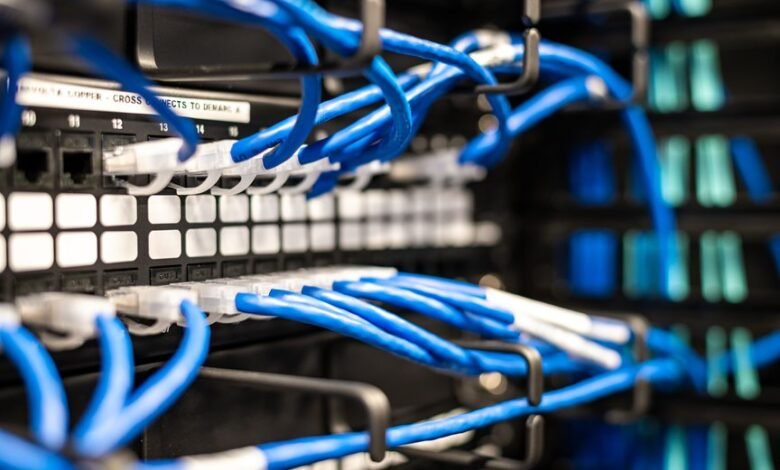
The 10.80.210 Private Network Configuration Guide presents a disciplined framework for planning, securing, and operating a private network. It emphasizes clear subnetting, role-based access, and auditable changes within a repeatable planning process. Core security, device hardening, and imaging are defined, along with structured monitoring and scalable troubleshooting. The approach seeks continuous optimization and formal change management. The result is a transparent ownership model across segments, inviting further examination of its practical implementation and governance implications.
How to Plan the 10.80.210 Network: IPs, Subnets, and Roles
Determining the 10.80.210 network plan begins with defining address space, subnetting strategy, and role assignments to ensure scalable, collision-free operation.
The approach emphasizes planning strategy and subnet planning to delineate networks, mirrors, and access scopes.
Roles are assigned to devices and segments, enabling deterministic routing, clear ownership, and auditable changes.
This framework supports freedom through disciplined, repeatable network design.
Set Up Core Security: Firewalls, Access Controls, and VPNs
The core security setup consists of defining perimeter and internal controls, deploying firewalls to enforce policy boundaries, implementing access controls to restrict authentication and authorization, and establishing VPNs to secure remote connectivity.
Firewall zoning directs traffic segmentation; access controllists dictate granted operations; vpn protocols specify encryption and tunneling standards.
Precise policy enforcement accompanies continuous monitoring, rapid incident response, and auditable credential lifecycle management across the network.
Deploy, Tune, and Harden Devices on 10.80.210
Deploying, tuning, and hardening devices on 10.80.210 requires a structured sequence: inventory and baseline configuration, secure imaging, and strict change management to ensure consistent operating states. The process emphasizes network segmentation, device hardening, access control, and performance tuning.
Troubleshooting scalability and incident response protocols are integrated, guiding precise deployment, rigorous testing, and resilient post-deployment maintenance. Continuous optimization follows formalized procedures.
Monitor, Troubleshoot, and Scale Your Private Network
How can an observed network state be translated into reliable performance metrics? The monitor framework applies structured telemetry, thresholding, and trend analysis to isolate deviations. Troubleshooting follows reproducible steps: isolate, validate, remediate, verify. Scaling uses modular capacity planning and automation. Emphasis on network monitoring and device hardening ensures consistent security posture while enabling rapid, autonomous recovery and informed capacity decisions.
Frequently Asked Questions
What Are Common IPV6 Considerations for 10.80.210?
IPv6 addressing should consider scalable addressing schemes and secure autoconfiguration, with emphasis on stable prefix delegation for consistent topology. The analysis highlights modular address plans, transition mechanisms, and privacy considerations while preserving freedom and network autonomy.
How to Back up 10.80.210 Configuration Data?
Backups should be scheduled with a clear procedure, ensuring a robust backup strategy and data encryption. The configuration data is exported, stored securely, versioned, and tested regularly, preserving integrity while enabling rapid restoration for a controlled, freedom-loving network environment.
Which Vendors Are Compatible With 10.80.210 VPN?
Vendor compatibility varies by device and firmware; the guide indicates multiple mainstream vendors support 10.80.210 VPN, with IPv6 considerations affecting interoperability and feature parity. Compatibility assessments emphasize documentation, testing results, and ongoing firmware updates for free-spirited deployments.
How to Recover After a Core Firewall Misconfiguration?
Initially, recovery scenarios favor a characterized misconfiguration rollback to known-good baselines, followed by validated reconfigurations. The core firewall should be isolated, logs reviewed, change windows established, and rollback verified before resuming operations with monitored, auditable safeguards.
What Logging Retention Policies Apply to 10.80.210?
The logging policy specifies a formal retention schedule and security auditing requirements, with event monitoring across core systems. It balances compliance and freedom, detailing data lifecycle limits, access controls, and periodic reviews to sustain integrity and transparency.
Conclusion
Conclusion: In a flawless orchestration, the 10.80.210 network remains perfectly secure, subnets perfectly sized, and devices impeccably hardened—so unsurprisingly boring you’ll forget it exists. Change management is a relic, telemetry is optional, and recovery is always immediate, because every incident is preemptively resolved by a mythical, silent admin. Irony aside, the plan’s rigor ensures auditable, scalable control—until reality nudges us to actually test it.